Cassi

Team of 1 // Cassi Home // 2025
Owning a home means a hundred small decisions a year, and nobody obvious to ask about any of them.
Most home apps answer that with a dashboard. A dashboard is just the question, rearranged.
Cassi answers by doing the thing — quietly, and usually before you thought to ask.

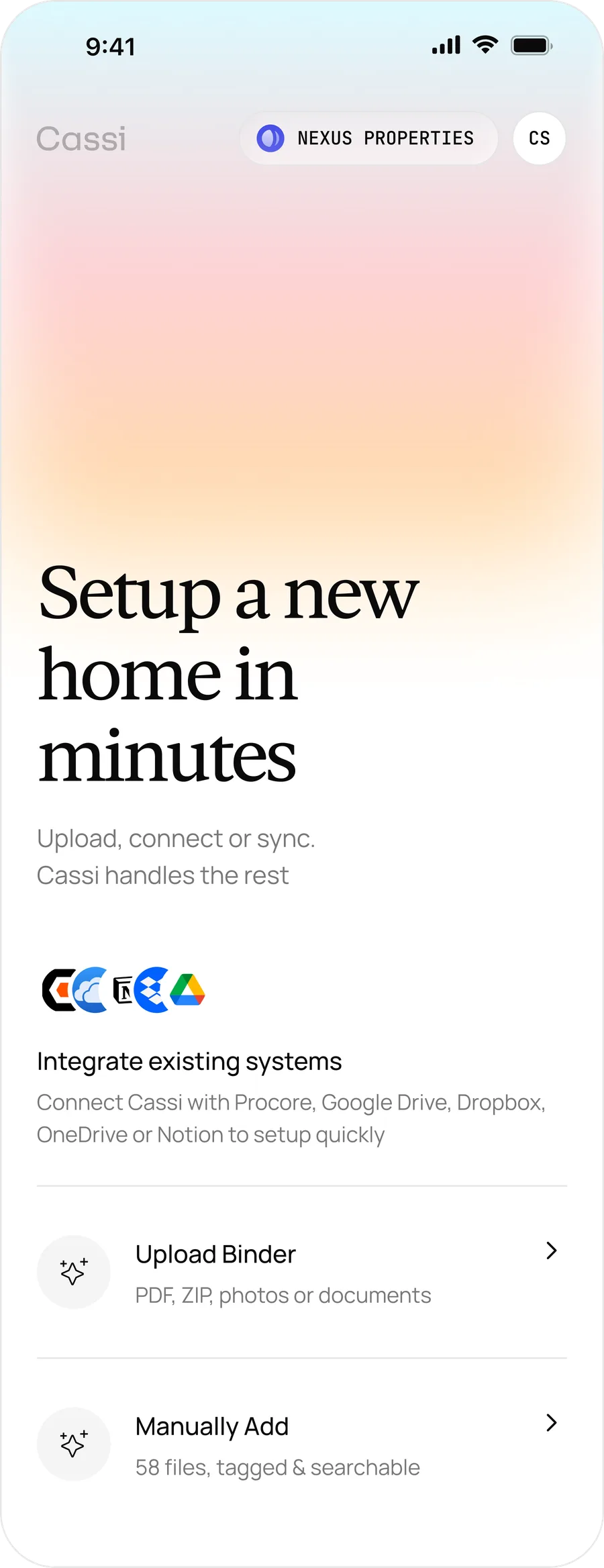
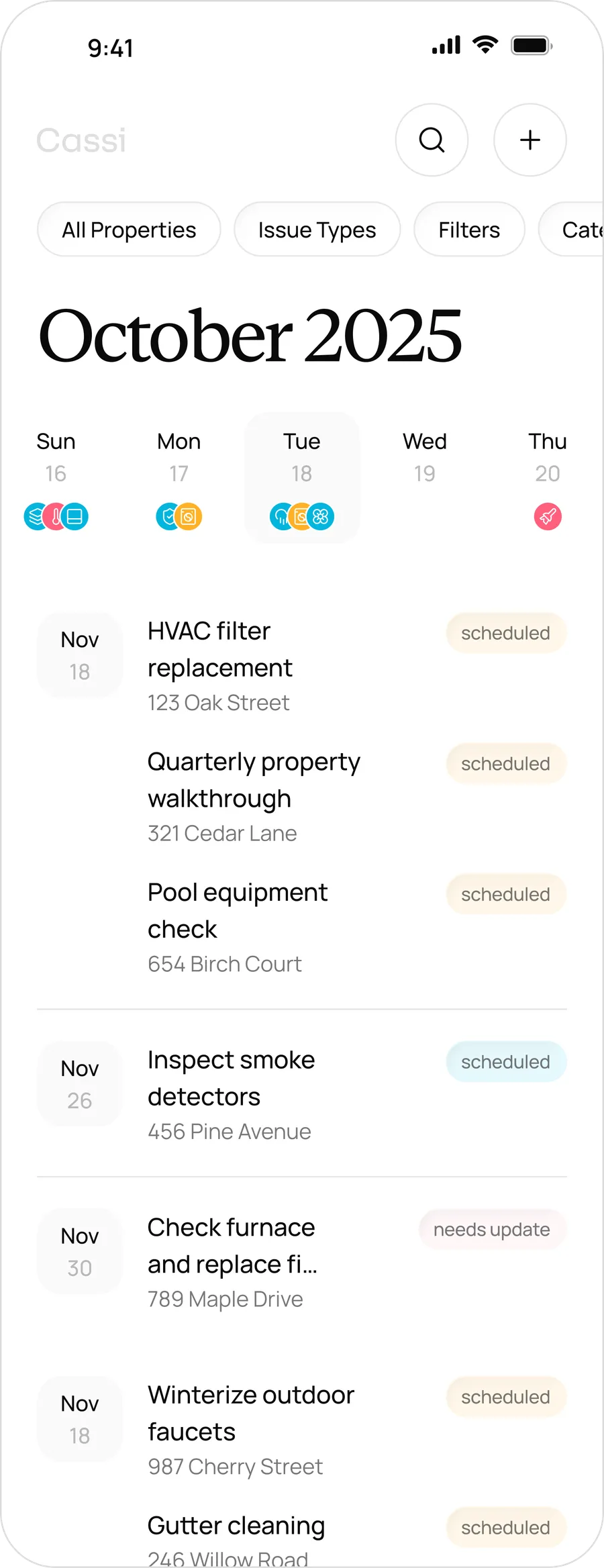
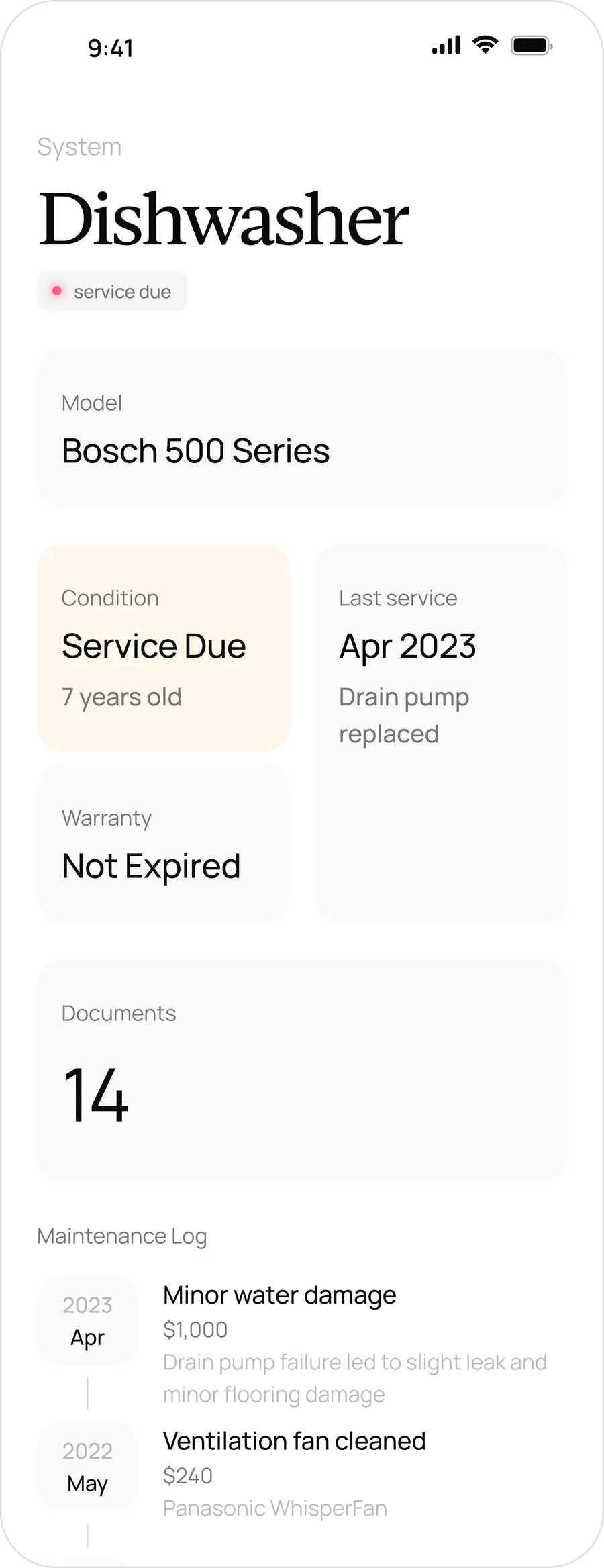
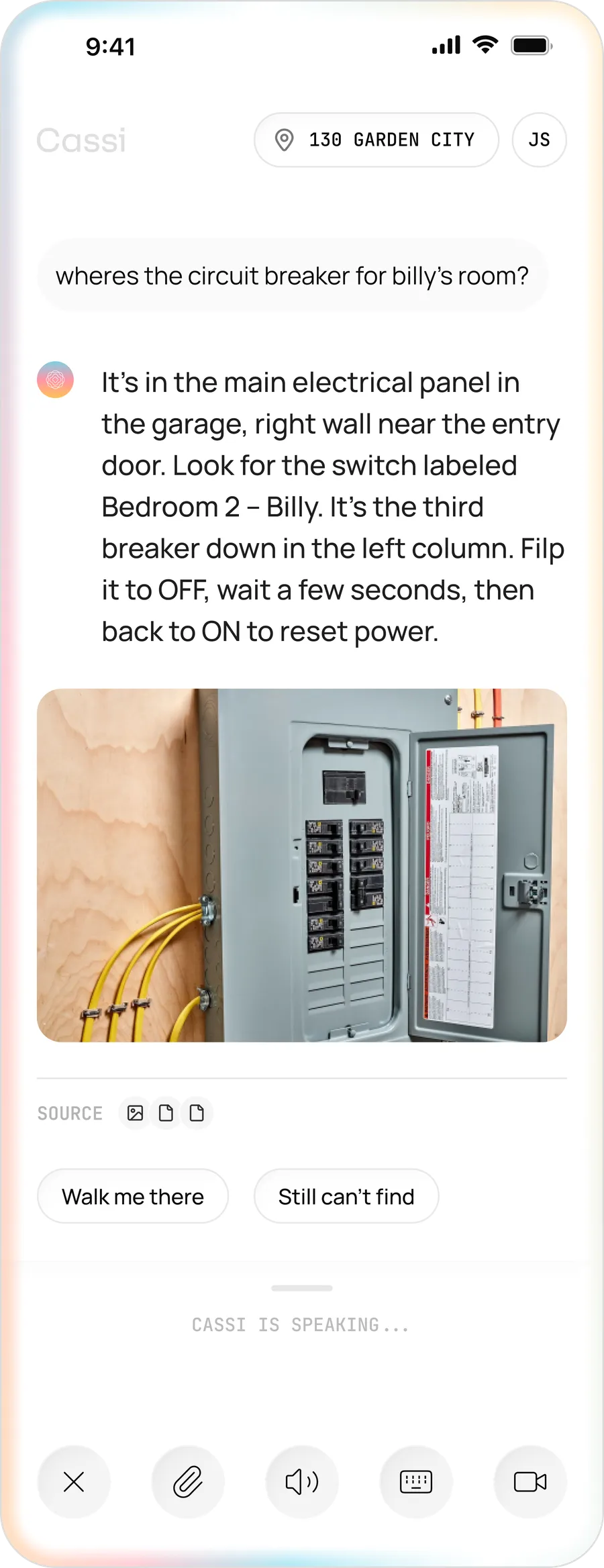
Every screen, not just the good ones.
Onboarding, uploads, the half-booked job, the fact you needed back in March. The in-between states are the product — everything else is a screenshot you cannot tap.
A few moments, up close.
The parts that do not fit on a phone screen: the flows, the pitch, and the states in between.
The states nobody screenshots
Uploading a document in five frames: parsing, almost-there, and the one field we could not read. Skip these and the prototype feels fake.
A season ahead
The maintenance flow hands over a seasonal checklist before the season turns, so the next right step is already waiting.
Talking to your house
Sometimes the fastest input is your voice. Describe the problem out loud, watch it listen, get an answer back.
Onboarding, mapped
The whole first run drawn end to end, from the home-intelligence score through to the first insurance upload.
Scored at a glance
Animated home-condition cards, each property scored so the comparison happens before anyone opens a spreadsheet.
The deck that carried the room
I also designed the final pitch deck of course. There were several versions of it, with quite a lot of varied pages that were used as per VC’s needs. This was designed in Figma and then later recreated in Google Slides (yes, it was a nightmare)
The questions I get asked.
Well, most of our potential users were in the US and preferred meeting in person and showing us what issues they had. We also were interviewing with home maintenance companies to see what people deal with. Being remote, it was hard for me to see those, I had to empathize and rely a lot on secondary knowledge.
Also balancing the product which has the best visuals versus shipping the MVP was challenging, because the tech team wanted to cut down a lot of it, which led the company to rehire the engineering team a couple of times.
One of our biggest mistakes was that we were trying to solve too many things at once — it would have been smarter to just focus on 1 problem that this solves and ship it.
Secondly, a lot of problems cannot be solved with tech and we have to accept it. There are regulations, people’s trust, ground level operational challenges that must be taken into account. Just an app cannot be a panacea.